%20(1).png)
The Rise of the Smart Kitchen: How AI Simplifies Foodservice Operations
- Dec 9, 2025
- 3 min read
What is a smart commercial kitchen?
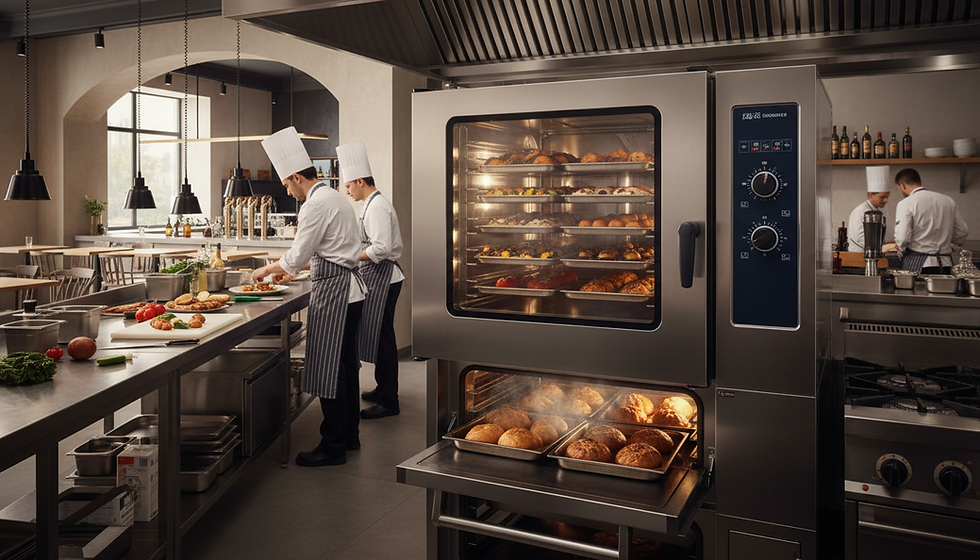
A smart commercial kitchen is a connected, tech-enabled workspace that uses sensors, AI, and automated systems to improve efficiency, reduce waste, enhance food safety, and streamline workflows. These kitchens help restaurants, hotels, chefs, architects, and foodservice operators run smoother, safer, and more cost-effective operations.
Smart commercial kitchens are no longer a future concept; they are becoming a practical advantage. Supported by connected equipment, sensors, and AI, they help operators manage time, labor, energy, and consistency without adding complexity to the line. For restaurants, hotels, and institutions, this shift is now essential for staying competitive. LaBel FoodService helps operators adopt smart technology through future-ready kitchen designs that prioritize workflow, compliance, and seamless collaboration with architects and MEP teams.

How Do Smart Commercial Kitchens Work?
Smart kitchens combine traditional BOH design with digital systems that monitor performance, automate tasks, and provide real-time data. These features allow operators to catch issues early, manage staff more effectively, and maintain consistent quality.
Core functions of a smart commercial kitchen include:
Automated temperature logging
Predictive equipment monitoring
AI-assisted cooking programs
Digital checklists for food safety
Real-time dashboards for energy and workflow analysis
Key Benefits of AI in Smart Kitchens
AI impacts day-to-day operations in ways that bring measurable improvements. Here are the areas where AI helps right now.
1. Predictive Maintenance
Sensors track temperature, vibration, and performance patterns. When readings fall outside the normal range, the system notifies staff early so maintenance can happen before equipment fails. This prevents downtime, reduces costs, and protects service continuity.
2. Smarter Inventory Management
AI analyzes ingredient usage, order trends, and menu patterns. This supports more accurate ordering, reduces spoilage, and helps operators avoid overstocking or running out of essentials.
3. Coordinated Workflows
Order systems communicate with cooklines and holding units. During peak times, stations receive prioritized cues that improve speed and minimize bottlenecks. This is especially valuable for multi-station kitchens and high-volume environments.
4. Better Operational Decisions
Real-time dashboards provide insights into:
Energy consumption
Station performance
Wait times
Labor bottlenecks
With this data, managers can adjust staffing, refine prep sequences, and optimize menus based on actual demand, not assumptions.
How Smart Kitchens Improve Food Safety and Compliance
Food safety is a top priority for every foodservice operation. Smart systems simplify compliance by digitizing critical tasks.
Examples include:
Connected cold storage that auto-logs temperatures
HACCP automation that reduces manual entries
Digital cleaning schedules with task verification
Alerts when safety thresholds are exceeded
These tools reduce human error and make inspections easier, faster, and more transparent. For chefs, managers, and operators, compliance becomes more predictable and controlled.

How Smart Kitchens Support Sustainability Goals
Smart technology helps operators reduce energy, water, and waste. This supports both environmental goals and cost savings.
Sustainability features may include:
Smart controls that adjust HVAC and lighting based on demand
Energy Star-rated equipment usage monitoring
Water-saving fixtures
Waste-tracking analytics that identify reduction opportunities
With rising utility costs, these improvements deliver strong long-term ROI.
How to Start Building a Smart Commercial Kitchen
The most successful smart kitchen projects begin with design, not equipment. Every data point, appliance, and integration should support workflow first.
Smart kitchen planning typically includes:
Intake and goals: Menu, throughput, labor model, and sustainability targets.
BOH layout: Adjacencies, clearances, hood placement, and utility planning.
Spec and integration: Equipment schedules, connected loads, sensor placement, and software integrations.
Handoff: CAD and DWG files, utility plans, submittals, and commissioning checklists.
What LaBel FoodService Delivers Today
Foodservice design: draft layouts, CAD/DWG sets, equipment schedules, utility plans
Equipment quotes and fulfillment: brand-approved packages, install-ready solutions
Project review and plan checks: identifying code, clearance, and utility conflicts before build
How to Future-Proof Without Overcommitting
A smart kitchen doesn’t need to be installed all at once. The most efficient approach is gradual adoption.
Recommended upgrade path:
Start with monitoring, such as temperature logging and energy tracking
Add automation, including cooking programs and holding logic
Adopt analytics and AI once operational data shows where ROI is strongest
LaBel FoodService designs commercial kitchens with expansion in mind, providing conduits, data drops, and integration pathways for smooth upgrades over time.
Ready to Plan a Smart Kitchen the Practical Way?
Book a consult, request an equipment quote, or send your BOH drawings for review. LaBel FoodService will map your workflow, select right-sized technology, and deliver export-ready drawings and submittals that support smart kitchen adoption at a sensible pace.


Comments